
VIMS EHSVIMS EHS

Inspecting equipment in ATEX hazardous areas — Ex equipment register, marking, inspection grades and documentation

ATEX equipment (explosion-protected or Ex equipment) is electrical or non-electrical equipment designed not to ignite flammable gases, vapours, mists or dusts in a hazardous area. The employer must select it for the zone, maintain its explosion protection throughout its service life and record inspections — in practice under EN 60079-17, which defines visual, close and detailed inspections.

This guide answers the questions maintenance managers, electricians and safety teams search for most: how often ATEX equipment must be inspected, who may inspect it, how to read an Ex nameplate, what the equipment register and verification dossier contain, and how to link it all to the hazardous area plan.

  • ATEX equipment inspection
  • EN 60079-17
  • Ex equipment register
  • Ex nameplate
  • Hazardous areas
  • Verification dossier

Published: 2026-11-12 · Updated: 2026-11-12 · 12 min read · Varilo deployment team

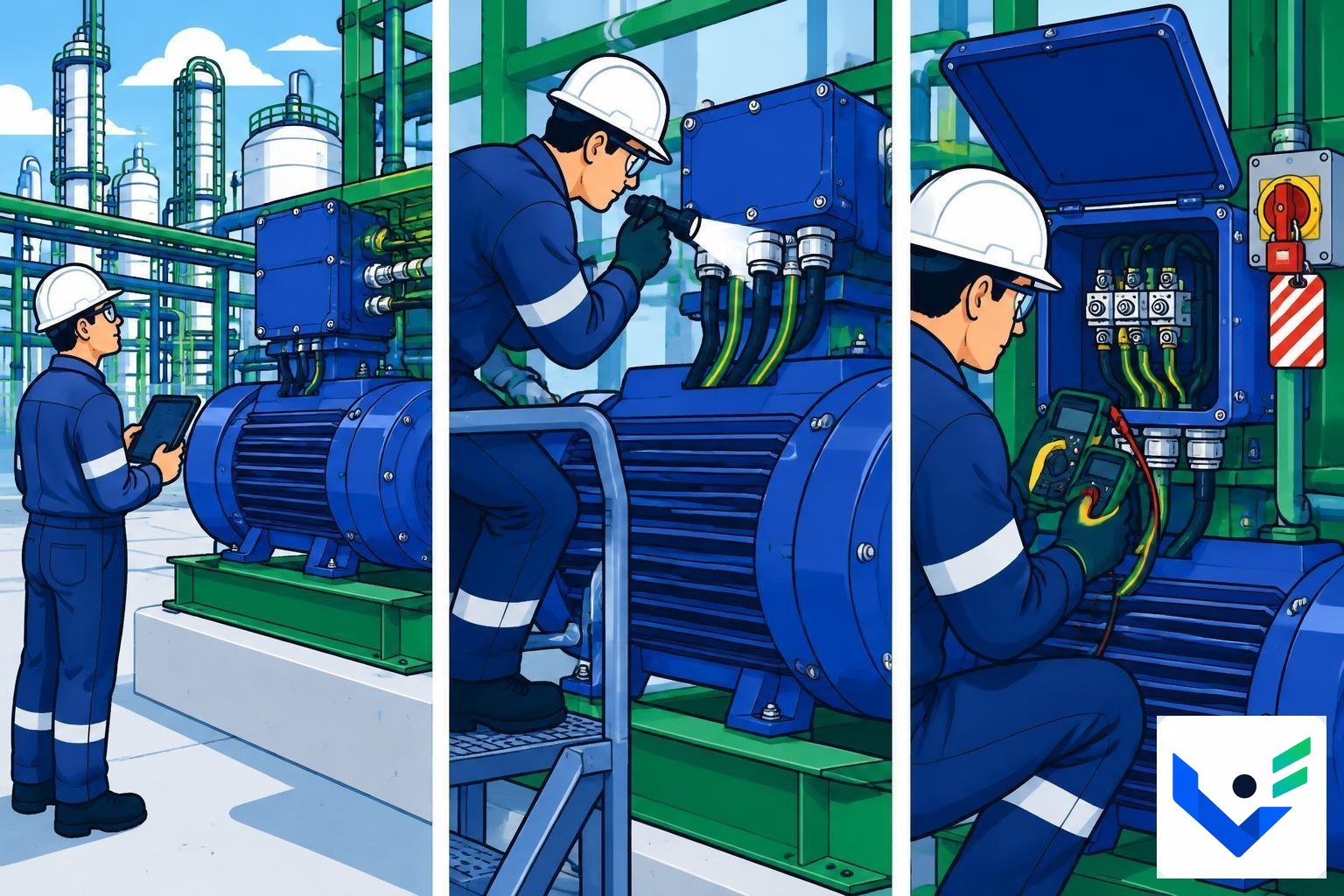
Three grades of ATEX equipment inspection under EN 60079-17 — visual inspection from floor level, close inspection of cable glands from a platform and detailed inspection inside an isolated enclosure — VIMS EHS illustration

1. Which regulations require inspections of equipment in hazardous areas?

Short answer: employer duties come from Directive 1999/92/EC (ATEX workplace directive), implemented in Poland by the Minister of Economy regulation of 8 July 2010. The employer assesses explosion risk, classifies workplaces into zones, prepares an explosion protection document and ensures equipment and installations are selected, installed and maintained so they do not become ignition sources.

Product rules come from Directive 2014/34/EU, which sets equipment categories, conformity assessment and marking. The manufacturer is responsible for new equipment meeting the requirements; the user is responsible for it still meeting them after years of operation, repairs and modifications.

Inspection of electrical equipment is detailed in EN 60079-17. A standard is not law, but explosion protection documents, manufacturer instructions, insurers and inspectors refer to it. Non-electrical equipment such as gearboxes, couplings and pumps is covered by the EN ISO 80079 series.
2. How do you read an ATEX nameplate — what does II 2G Ex db IIC T4 Gb mean?

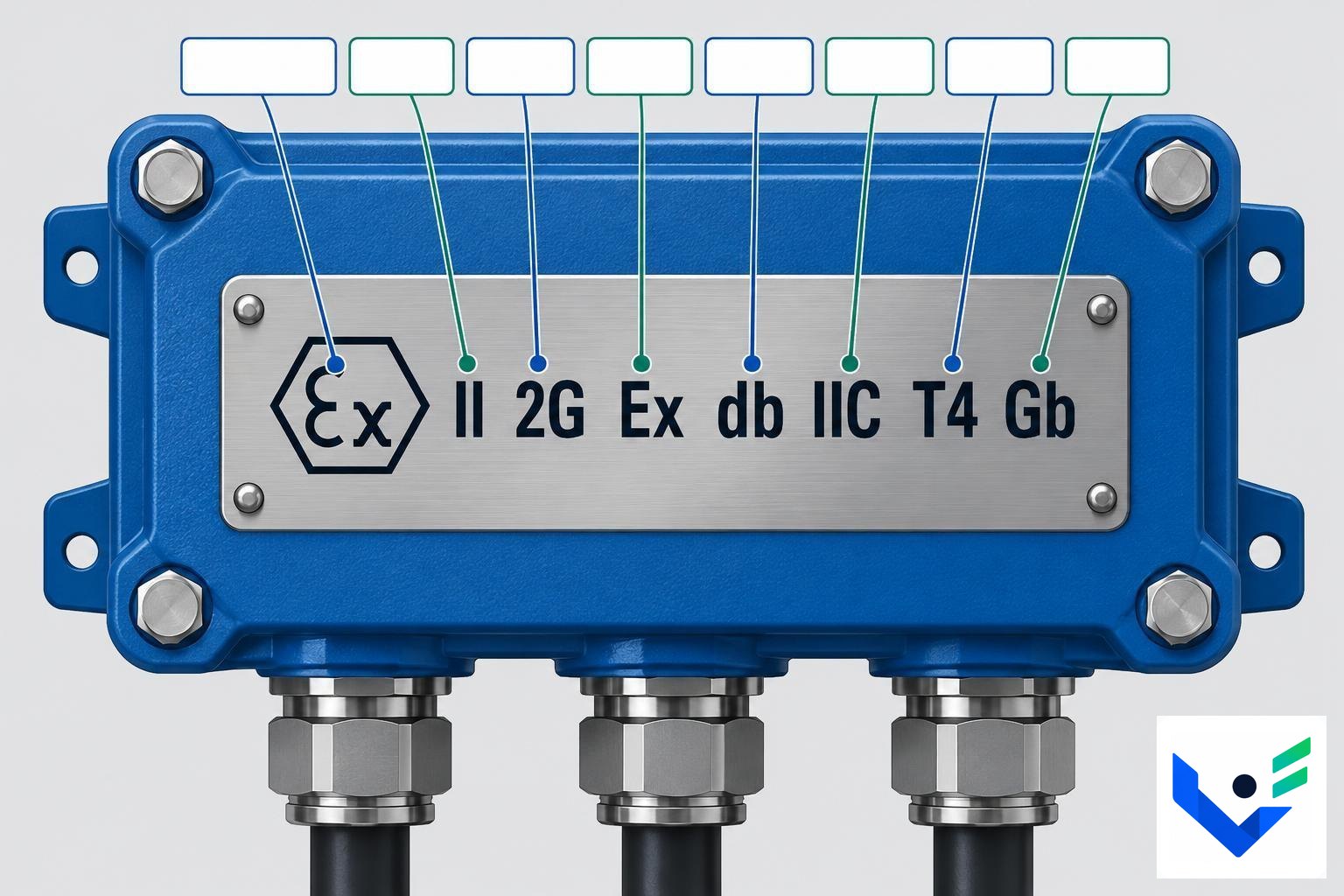
Short answer: an Ex nameplate combines Directive 2014/34/EU marking with the protection concept code from EN 60079. In II 2G Ex db IIC T4 Gb: the Ex hexagon marks a product for explosive atmospheres; II is the equipment group for non-mining use; 2 is the category; G means gas atmosphere (D is used for dust).

The rest describes construction: Ex db is a flameproof enclosure that withstands an internal explosion without transmitting flame (other common types are Ex eb increased safety, Ex ia/ib intrinsic safety and Ex tb dust protection by enclosure). IIC is the gas subgroup covering the most demanding gases such as hydrogen and acetylene; IIC equipment also suits IIB and IIA. T4 means surface temperature will not exceed 135°C. Gb is the equipment protection level (EPL) for zone 1.

The plate also shows the type examination certificate number, the ambient temperature range (often −20°C to +40°C) and possibly the letter X, meaning specific conditions of use set out in the certificate. X is one of the most often overlooked items — inspectors must check those conditions are actually met on site.

ATEX nameplate on an explosion-proof enclosure showing the Ex hexagon and the marking II 2G Ex db IIC T4 Gb with leader lines to each element — VIMS EHS infographic
Each part of the Ex marking answers a different question: where, in which atmosphere and at what temperature the equipment may be used (illustrative).

3. Which equipment may be used in zones 0, 1, 2 and 20, 21, 22?

Short answer: the category must match the zone. Zones 0 (gas) and 20 (dust), where an explosive atmosphere is present continuously or for long periods, require category 1 equipment (EPL Ga or Da). Zones 1 and 21 allow category 1 or 2 (EPL Gb or Db). Zones 2 and 22, where an explosive atmosphere is rare and short-lived, allow category 1, 2 or 3 (EPL Gc or Dc).

Category is only the first condition. Equipment must also have the right subgroup (IIA, IIB, IIC for gas; IIIA, IIIB, IIIC for dust) and a temperature class below the auto-ignition temperature of the substance present. Substance data comes from the explosion protection document and safety data sheets, so the chemical register and the Ex register should reference each other.

The most common audit finding is equipment moved without checking its marking: a category 3 luminaire in zone 1, a IIB fan in a hydrogen room or an ordinary extension lead in zone 22. These usually arise during refurbishments, which is why they belong in a management of change process. Zone classification itself is covered in the guide to ATEX zones and site safety plans.

4. What is the difference between visual, close and detailed inspection under EN 60079-17?

Short answer: EN 60079-17 defines three inspection grades. Visual inspection identifies defects visible without tools or opening the enclosure — missing bolts, damaged housings, illegible plates. Close inspection adds items needing access equipment or simple tools — gland tightness, seals, bonding. Detailed inspection requires opening the isolated enclosure to check the interior, terminals, flamepaths and measurements such as insulation resistance.

The standard also defines inspection types: initial inspection before commissioning (always detailed), periodic inspections and sample inspections of part of the equipment. Inspection after repair or reconfiguration is treated as initial inspection of the changed item.

Opening an explosion-protected enclosure in a hazardous area is high-risk work. A detailed inspection first requires isolation under a LOTO procedure and, in many plants, a permit to work with gas testing before opening.

5. How often must ATEX equipment be inspected?

Short answer: there is no single legal interval. EN 60079-17 states that the interval between periodic inspections should not exceed 3 years without expert advice; the actual interval depends on equipment type, manufacturer guidance, environment (corrosion, vibration, dust, temperature) and previous results. Poor results shorten it; consistently good results may extend it within the standard.

An alternative to periodic inspection is continuous supervision by skilled personnel who regularly attend the installation, know the equipment and record its condition. It requires documented competence, scope and records — it reorganises inspection rather than replacing it.

Ex inspections do not replace other tests. The electrical installation still needs periodic shock-protection and insulation measurements, machinery needs manufacturer-defined checks and pressure or lifting equipment needs statutory examinations. Keep all of them in a single inspection register to avoid duplicate site visits.

6. Who may inspect and repair ATEX equipment — what qualifications are needed?

Short answer: in Poland, work on electrical equipment requires a qualification certificate under the 1 July 2022 regulation on qualifications for operating equipment, installations and networks. The electrical group lists explosion-protected electrical equipment and installations as a separate scope — the certificate should explicitly include it, for operation (E) or supervision (D).

EN 60079-17 additionally requires inspections by skilled personnel who know protection concepts, installation practice, zone classification and documentation requirements, with periodic refresher training. Many plants also expect a competence certificate such as IECEx, although Polish law does not require it.

Repair and overhaul of Ex equipment — especially flameproof enclosures and motors — follows EN 60079-19, ideally at the manufacturer or a workshop equipped for such work. A repair that changes flamepath dimensions can void explosion protection even if the equipment still runs.

7. What do the Ex equipment register and the verification dossier contain?

Short answer: the verification dossier, required by EN 60079-14 and used for inspections under EN 60079-17, gathers everything that proves the installation is fit for the zone: the zone classification with subgroup and temperature class, the Ex equipment list with locations, EU declarations and certificates, manufacturer instructions, intrinsically safe loop documentation, initial and subsequent inspection records and the qualifications of the people who did them.

At its heart is the Ex equipment register — each item with an ID, location, zone, full nameplate marking, certificate number, installation date, grade and date of last inspection, result, next due date and repair history. A spreadsheet register quickly goes stale as equipment is moved, replaced or repaired.

The register links to the explosion protection document: the document describes zones and measures, the register proves the installed equipment matches them. Review one whenever the other is updated.

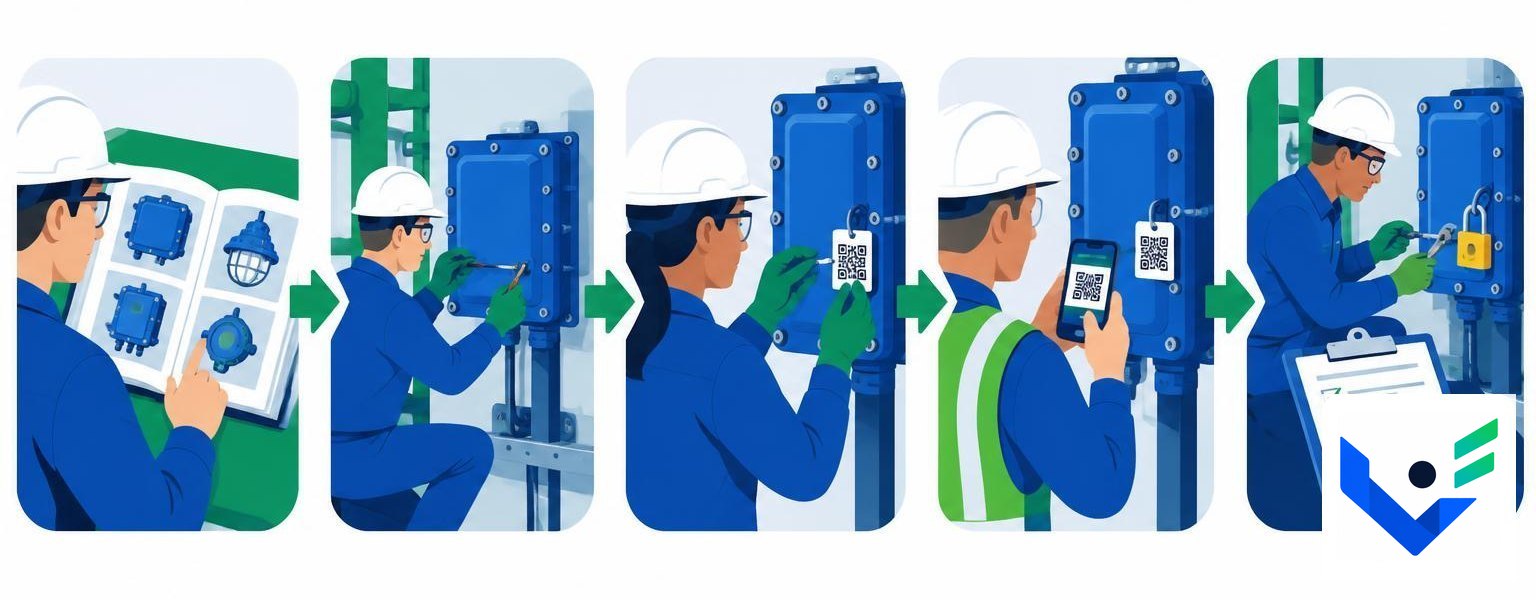
Lifecycle of Ex equipment in a plant: selection from a catalogue, installation, QR tagging, periodic inspection with a phone scan and repair work with a LOTO padlock and signed permit — VIMS EHS illustration
From selection to repair — every stage of an Ex item's life leaves a record in the verification dossier (illustrative).

8. How do you keep the ATEX register and inspections in VIMS EHS on the site zone map?

In the Registers and inspections module each Ex item has a card with its full nameplate marking, certificate number, zone and an inspection schedule split into visual, close and detailed grades. The software sends reminders, stores reports, photos and manufacturer documents and shows repair history. Inspector qualifications can be kept in training and qualification records so it is clear whether a certificate covering explosion-protected equipment is valid.

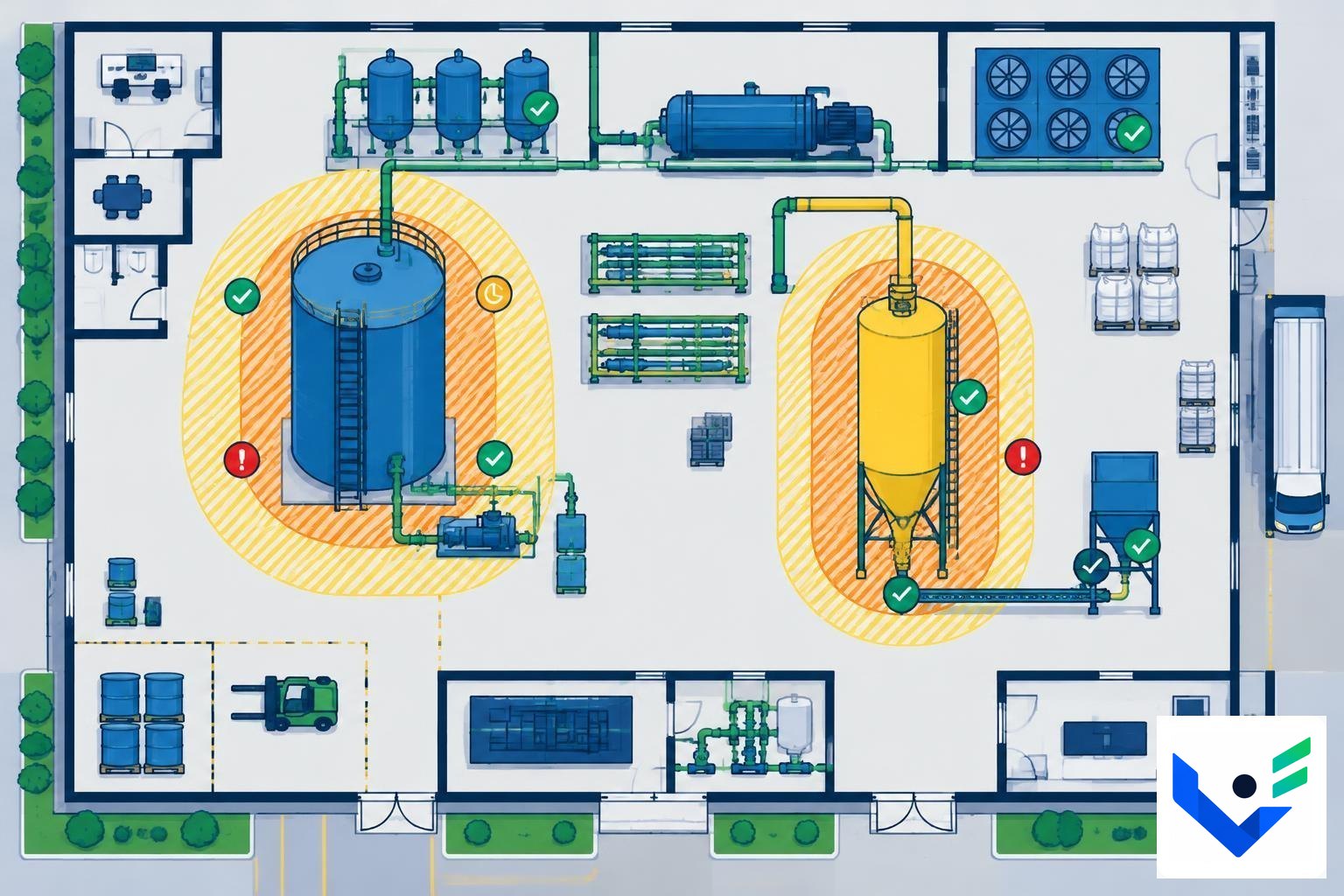
In the Plans and zones module equipment is placed on the site plan together with zone 0, 1, 2 and 20, 21, 22 boundaries. One plan shows where an item stands, which zone it works in and its inspection status, making it easier to plan rounds and compare equipment category with zone requirements. A QR code or NFC tag from the access points module on the enclosure lets the electrician open the item card on site and record the result.

Work that requires opening an enclosure can be linked to the permit to work module. The software organises deadlines and documents but does not judge for people: equipment selection, inspection results and fitness-for-use decisions remain with qualified staff.

Site plan with hazardous zones around a solvent tank and a dust silo and Ex equipment pins coloured by inspection status: current, due soon and non-compliant — VIMS EHS illustration
Ex equipment placed on zones with inspection status colours (illustrative, not an application screen).

Inspection grades for equipment in hazardous areas under EN 60079-17

A simplified summary; detailed checklists for each protection concept are in the standard and manufacturer instructions.

GradeScopeAccess and toolsWhen used
Visualdefects visible without opening: enclosure, bolts, plate, cablesno tools or laddersperiodic and sample inspections, continuous supervision
Closevisual scope plus glands, seals, bondingplatform or ladder, simple tools, no openingperiodic inspections per plan
Detailedclose scope plus interior, terminals, flamepaths, measurementsenclosure opened after isolationinitial inspection, after repair, periodically per plan

Key takeaways

  • Equipment category, subgroup and temperature class must match the zone and the substance.
  • EN 60079-17 defines visual, close and detailed inspections; initial inspection is always detailed.
  • Periodic inspection intervals should not exceed 3 years without expert advice, and poor results shorten them.
  • Electricians need a qualification certificate covering explosion-protected equipment.
  • The Ex register and verification dossier must keep pace with every change to the installation.

Related modules

Registers and inspections

Registers and periodic inspections — deadlines tracked by the system, not by memory

A plant runs a dozen parallel registers: cranes, pressure vessels, forklifts, extinguishers, hydrants, electrical installations, ladders, hoists, gates. Each has its own cycle and its own owner. This module brings them into one register with one calendar.

Explore the VIMS EHS module: Registers and inspections with reminders

Interactive safety plans and zones

Safety plans and zones — your site on a live safety map

Evacuation plans in display cases and binders of floor plans rarely help when every second counts. The Safety plans and zones module turns a floor plan into an interactive map linked to documentation, chemicals, safety walks and emergency procedures.

Explore the VIMS EHS module: Interactive safety plans and zones

Permit to work

Permit to work — an electronic workflow for high-risk activities

No more paper permits travelling around the site in search of a signature. The application, task risk assessment, approvals and working conditions run in one workflow visible to everyone involved.

Explore the VIMS EHS module: Permit to work (PTW)

QR / NFC access points

QR / NFC Access Points — everything about a zone in one scan, no login

A worker scans a code or taps a tag and instantly sees what applies to their zone: chemicals, instructions, LOTO, risks and a reporting form.

Explore the VIMS EHS module: Zero-login QR/NFC access points

Safety training and employee qualifications

Training and qualifications — stop tracking expiry dates in a spreadsheet

See in one view who holds valid training and qualifications, whose certificates expire soon and what is missing for a given job.

Explore the VIMS EHS module: Training and qualification records

Frequently asked questions

How often should ATEX equipment be inspected?

The interval is set from EN 60079-17, manufacturer guidance and operating conditions. Periodic inspections should not be more than 3 years apart without expert advice; harsh conditions require more frequent checks.

Who can inspect equipment in an Ex zone?

A person skilled in explosion protection and, for electrical equipment in Poland, holding a qualification certificate covering explosion-protected equipment and installations.

What does the letter X on an ATEX nameplate mean?

Specific conditions of safe use set out in the certificate, such as installation or temperature limits. Inspections check that they are met on site.

Can category 3 equipment be installed in zone 1?

No. Zones 1 and 21 allow category 1 or 2 equipment. Category 3 is intended for zones 2 and 22.

What is an ATEX verification dossier?

The full documentation of a hazardous-area installation: zone plan, Ex equipment list, certificates and declarations, instructions, inspection records and inspector qualifications. EN 60079-14 requires it.

Does Ex equipment need re-inspection after repair?

Yes. After repair or reconfiguration the changed item receives a detailed inspection, and flameproof enclosures are repaired under EN 60079-19.

Ex equipment register on the zone map

See how VIMS links the explosion-protected equipment register with the zone plan, visual, close and detailed inspection deadlines and QR codes on enclosures.