
VIMS EHSVIMS EHS

Work instruction vs procedure in health and safety: differences, types, writing rules and employee acknowledgement

A procedure describes a process: who acts, when and in what order, often across departments. A work instruction describes how to perform a specific task at a workstation, machine or with a substance, step by step, for the person doing it. In Poland the duty to issue safety instructions comes from art. 237⁴ § 2 of the Labour Code and § 41 of the general OSH regulation.

This guide untangles terms that are often mixed up in workplaces. It answers what safety officers, production managers and quality teams search for most: how a procedure differs from an instruction, which types of instructions exist, what a workstation safety instruction must contain, how to write instructions people actually read and how to prove an employee has read the current version. Legal references are Polish.

  • Safety work instruction
  • Workstation instruction
  • Procedure vs instruction
  • One Point Lesson
  • Toolbox talk
  • Instruction acknowledgement

Published: 2026-11-12 · Updated: 2026-11-12 · 10 min read · Varilo deployment team

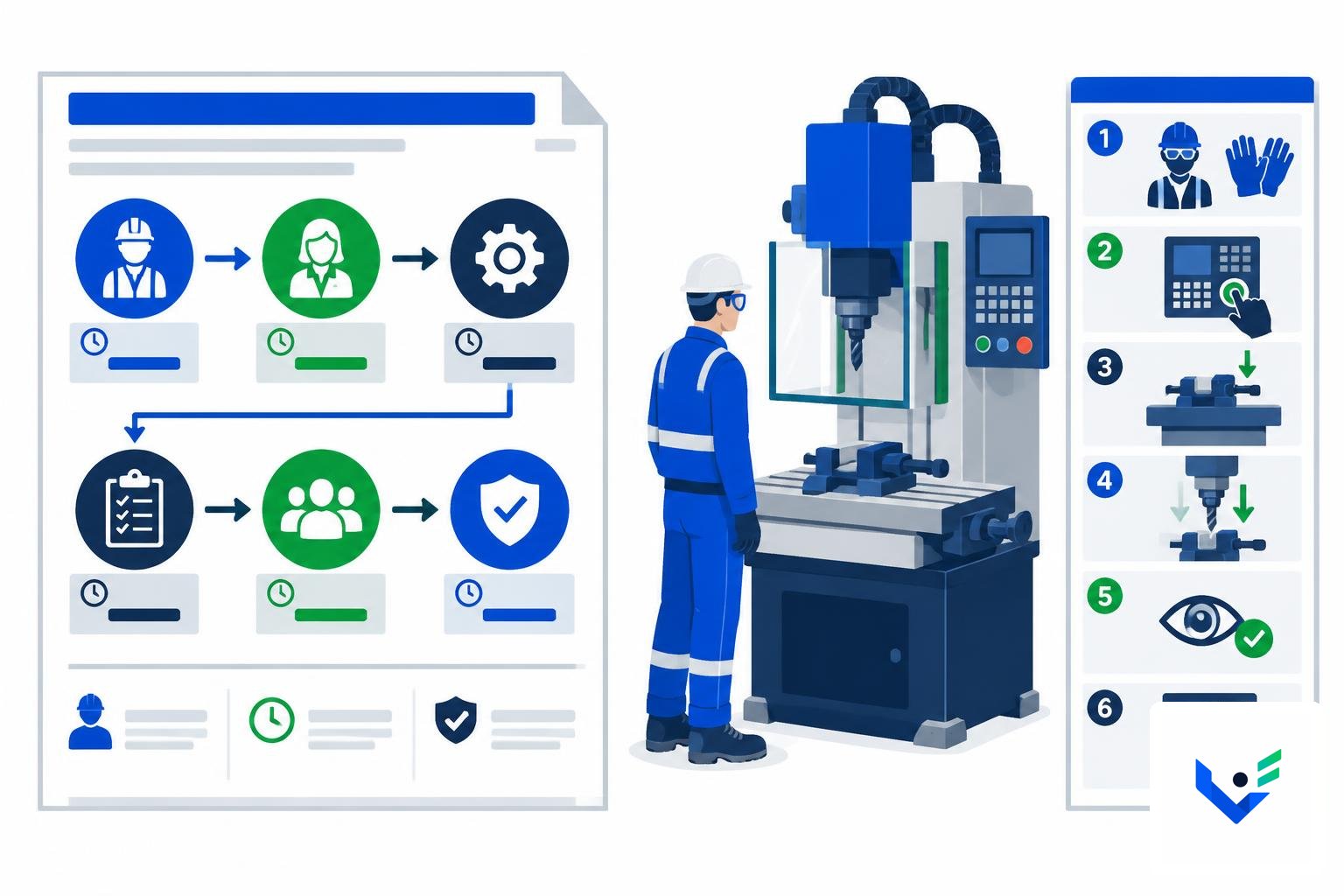
A procedure shown as a cross-department flowchart next to a step-by-step machine instruction — VIMS EHS illustration

1. What is the difference between a procedure and a work instruction?

Short answer: a procedure says what is done and by whom in a process; an instruction says how to perform one task. An accident investigation procedure covers reporting, securing the scene, appointing a team, finding causes and corrective actions across several roles. A lathe safety instruction describes what the operator does before starting, during work, after finishing and in an emergency.

Procedures are typical of management systems such as ISO 45001, ISO 9001 and ISO 14001; current editions speak of documented information rather than mandatory documented procedures, so the organisation decides what to describe as a procedure. Safety instructions, by contrast, are required directly by Polish labour law (art. 237⁴ § 2 of the Labour Code).

The two complement each other: a lockout procedure sets plant-wide rules, while the instruction at a given machine shows where its isolation points are and in which order to lock them.
2. What types of instructions exist in a workplace?

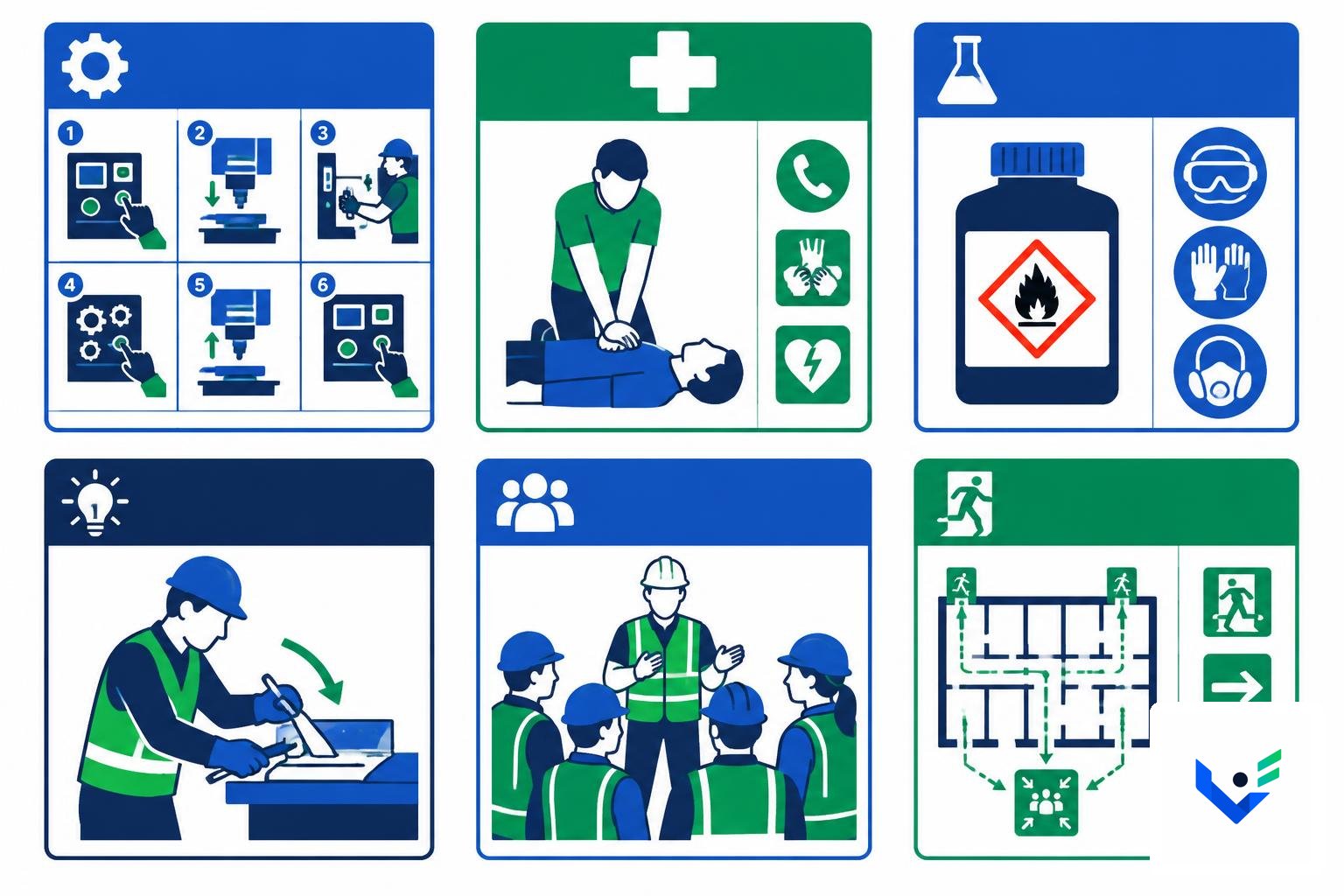
Short answer: § 41 of the Polish general OSH regulation lists instructions for technological processes and hazardous work, operation of machines and technical equipment, handling harmful and hazardous materials and first aid. Sites also have plant-wide documents such as the fire safety instruction required by fire regulations, and workstation instructions combining several topics.

Lean and TPM add short formats. An OPL (One Point Lesson) is a single page on one task or hazard, usually with a picture. A toolbox talk is a few-minute briefing before a shift in which a supervisor discusses one specific hazard. Both reinforce an instruction but do not replace it.

For chemicals, the source for an instruction is the safety data sheet, translated into language the worker understands.

Six types of workplace instructions: machine operation, first aid, chemical handling, OPL, toolbox talk and evacuation — VIMS EHS illustration
Illustrative image: types of instructions and short reminder formats used on site.

3. What must a workstation safety instruction contain?

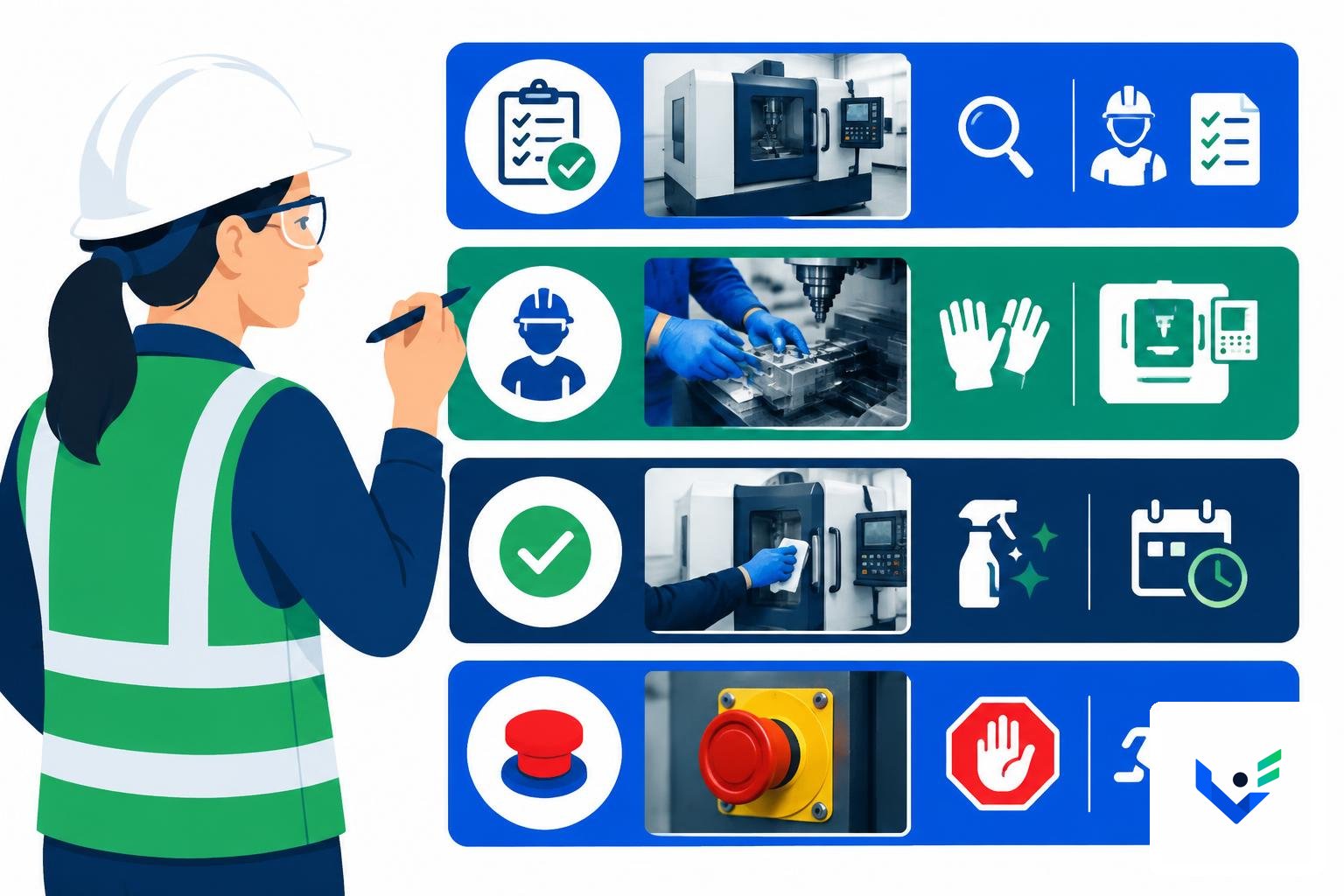
Short answer: under § 41(2) of the general OSH regulation it should set out tasks before starting work, rules for performing the work safely, tasks after finishing and rules for emergencies threatening life or health. Instructions must be concise, understandable and available to workers at all times.

For machines, the manufacturer's manual is the starting point but does not replace the workstation instruction, which covers local conditions of use, required PPE, cleaning and shift handover, informed by the occupational risk assessment.

Good practice adds a version number, date, author, approver and next review date. There is no fixed statutory review interval; the instruction changes when the machine, process, substance or risk assessment changes, or when an incident shows it was incomplete.

4. How do you write instructions people actually read?

Short answer: short imperative sentences, in the order of execution, with a picture at each key step. Instead of “attention should be paid to correct guard fixing”, write “Check the spindle guard is closed. If not, do not start the machine.” One sentence, one action.

Use photos of the real workstation, mandatory PPE pictograms, highlighted prohibitions, the emergency number and the location of the emergency stop. Test the text with an operator at the machine, and provide it in a language foreign workers understand.

A laminated sheet from years ago is one of the most common inspection findings: the instruction exists but describes the machine before its last modification.

Safety specialist arranging a workstation instruction into four blocks: before, during, after work and emergency, with machine photos and pictograms — VIMS EHS illustration
Illustrative image: the four parts of a workstation instruction required by § 41.

5. How do you familiarise an employee with an instruction and record it?

Short answer: through on-the-job instruction before work starts and a confirmation tied to a specific document version. An employer may not allow work without sufficient knowledge of OSH rules, and the employee confirms in writing that they know them (art. 237⁴ KP). Familiarisation with instructions is part of workstation training.

A signature sheet in a binder does not show which version was read or who has not yet read last month's update. After each revision everyone concerned must be familiarised again.

Confirmation is not proof of understanding, so for high-risk tasks add a few check questions or a practical demonstration signed off by the supervisor.

6. How does VIMS help manage instructions and versions?

Short answer: one instruction register with version history, QR codes at machines and electronic acknowledgements. The digital workplace safety instructions and kiosk module stores PDF or Word instructions with version, date and approver; a QR code at the machine always opens the current version.

Workers without company phones use kiosk mode on a shop-floor tablet or terminal. Each acknowledgement records the person, document version, date and time. After a new version, VIMS shows who has not confirmed it yet, and check questions can be added to selected instructions.

The register links with equipment registers and reviews and training and qualifications, so the machine view shows both the instruction and authorised operators. You can join the testing programme via the contact page.

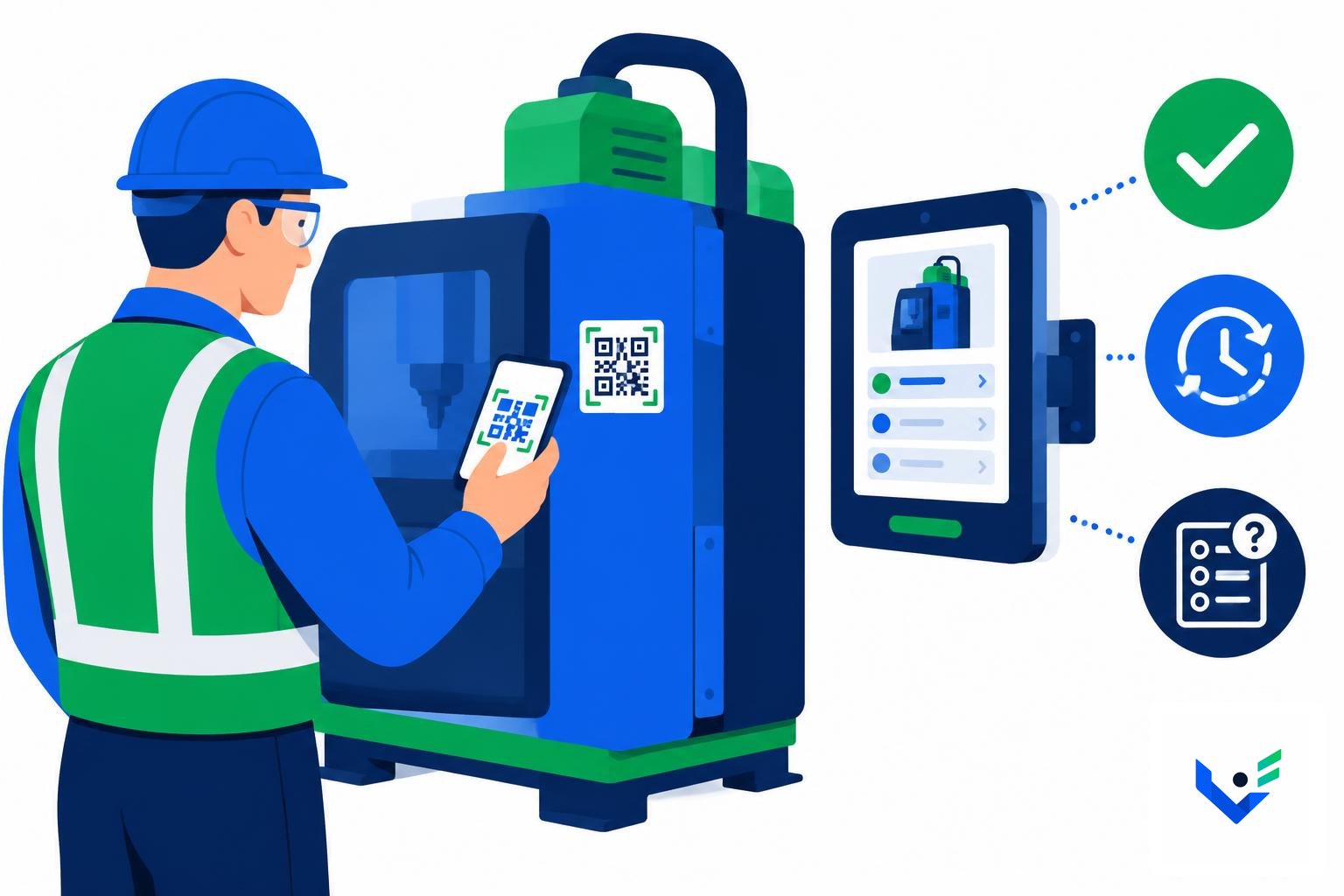
Worker scanning a machine QR code with a phone next to a kiosk tablet and icons for confirmation, version history and check questions — VIMS EHS illustration
Illustrative image: accessing the current instruction via QR code or kiosk and confirming it.

Procedure, workstation instruction, OPL and toolbox talk compared

Typical use of each document. Legal requirements apply mainly to safety instructions.

FeatureProcedureWorkstation safety instructionOPLToolbox talk
Question answeredWho does what and whenHow to work safelyHow to do one taskWhat to watch today
BasisManagement system (ISO 45001, ISO 9001)Art. 237⁴ § 2 KP, § 41 general OSH regulationLean and TPM practiceTeam management practice
AudienceSeveral departments and rolesWorker at the workstationOperator or teamTeam before the shift
FormatDocument with responsibilitiesBefore, during, after work, emergenciesOne page with a pictureShort conversation
ConfirmationPer management systemWritten acknowledgementRecommendedAttendance list recommended

Workplace instruction checklist

  • Every workstation, machine and hazardous substance has an assigned instruction.
  • The instruction covers before, during and after work and emergencies.
  • It carries a version number, date, author and approver.
  • It is available at the workstation at all times.
  • Every employee has acknowledged the current version.
  • It is reviewed after changes to machines, processes, risk assessment or after incidents.
  • OPLs and toolbox talks reinforce instructions but do not replace them.

Frequently asked questions about instructions and procedures

What is the difference between a procedure and a work instruction?

A procedure describes a process and responsibilities, often across departments. A work instruction describes how to perform a specific task safely at a workstation.

Are safety instructions mandatory in Poland?

Yes. Art. 237⁴ § 2 of the Labour Code requires employers to issue detailed safety instructions for workstations, and § 41 of the general OSH regulation defines their scope.

What should a workstation instruction contain?

Tasks before starting, rules for safe work, tasks after finishing and rules for emergencies.

How often should a safety instruction be updated?

There is no fixed statutory interval. Update it when the machine, process, substance or risk assessment changes or an incident shows a gap, and set a periodic review.

Is the machine manufacturer's manual enough?

Usually not. It is the basis, but the workstation instruction covers local conditions, PPE and emergency actions.

What is an OPL?

A One Point Lesson is a one-page material on a single task or hazard, usually with a picture. It supplements an instruction.

How can acknowledgement be recorded electronically?

The system should record the person, document version, date and time. VIMS uses QR codes, kiosk mode and an acknowledgement register per instruction version.

The current instruction at every machine

See how VIMS combines an instruction register, QR codes, kiosk mode and acknowledgements tied to a specific document version.