
VIMS EHSVIMS EHS

Chemical labelling at work — CLP labels, secondary containers, pressurised aerosols and shelf life

Chemical labelling means the CLP label (Regulation (EC) No 1272/2008) placed by the supplier on the packaging, plus the marking the employer provides on containers and pipework used on site. The label states hazards, precautions and the supplier; the safety data sheet complements it.

This guide answers common questions: what a CLP label must contain, whether a decanted spray bottle needs a label, how to mark pipes and tanks, whether aerosols have an expiry date, how to read the code on the can and how to store pressurised containers. Polish national references apply; we separate supplier duties, employer duties and good practice.

  • Chemical labelling
  • CLP label
  • Secondary containers
  • Aerosols
  • GHS pictograms
  • SDS

Published: 2026-11-12 · Updated: 2026-11-12 · 8 min read · Varilo deployment team

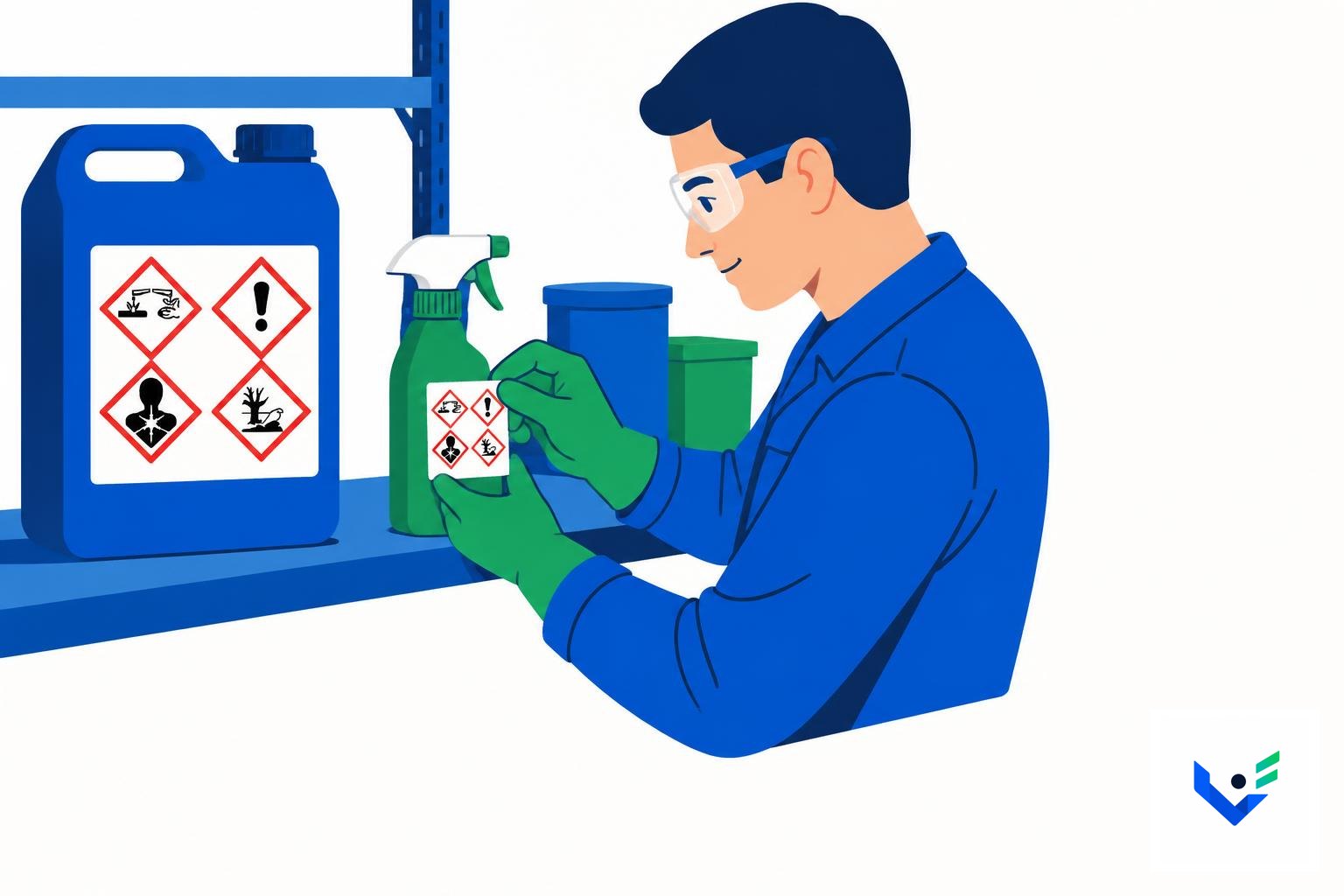
Worker in safety glasses applying a CLP pictogram label to a spray bottle next to the original supplier canister — VIMS EHS illustration

1. What must a CLP label contain?

Short answer: under Article 17 CLP — supplier name, address and phone number, nominal quantity (for consumer packaging), product identifier, hazard pictograms, signal word, hazard statements (H), precautionary statements (P) and supplementary information where needed. Mixtures notified to poison centres also carry a UFI code.

The label must be in the official language of the country of sale. The supplier is responsible for its content. Regulation (EU) 2024/2865 amends CLP with minimum font sizes, fold-out label rules and digital labelling, applying in stages — confirm exact dates in the current text.
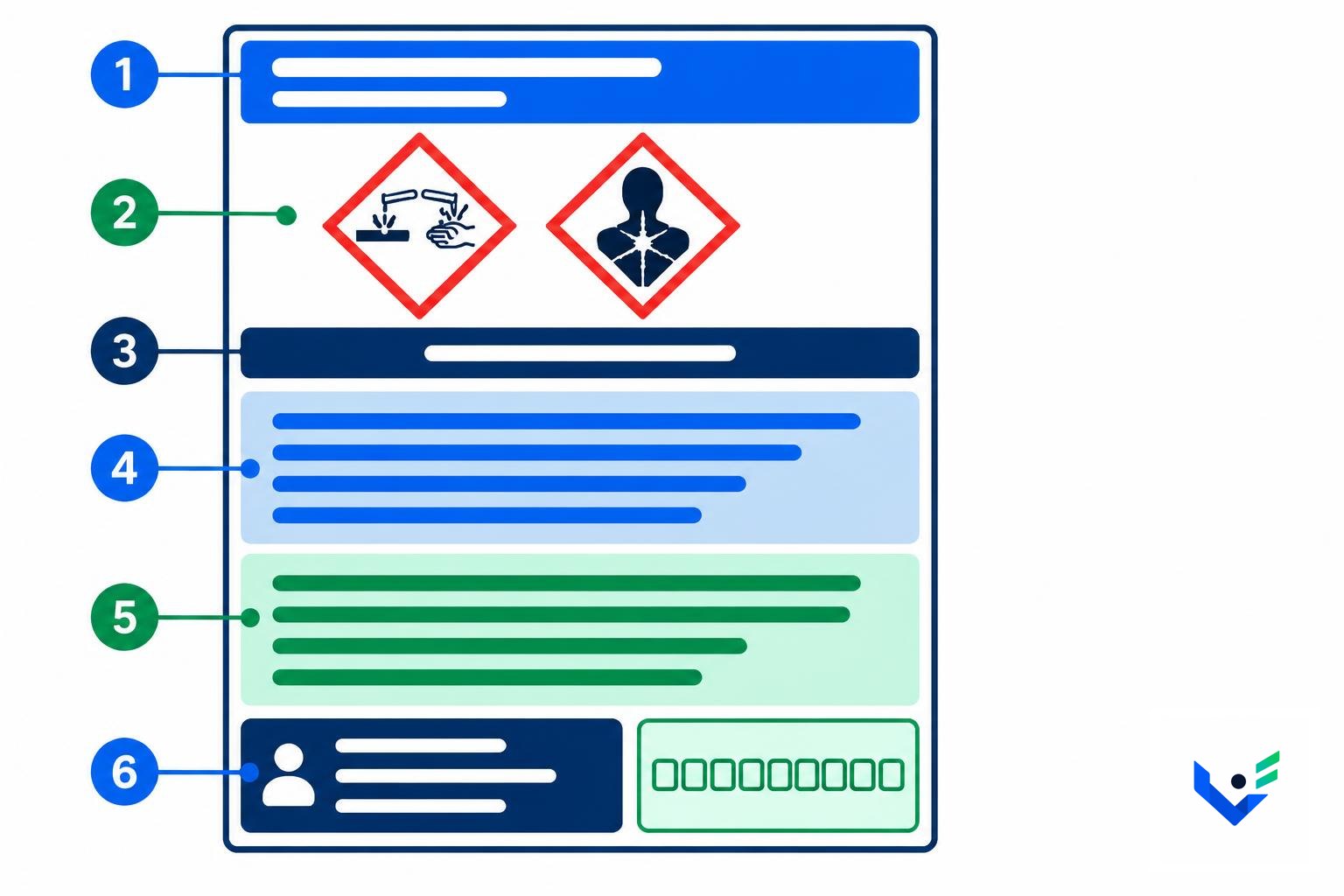
CLP label diagram with numbered fields: product identifier, pictograms, signal word, H statements, P statements, supplier and UFI — VIMS EHS illustration
Illustrative image: the six main CLP label elements. Not a real product label.

2. Does a decanted spray bottle need a label?

Short answer: yes. Annex III of Directive 92/58/EEC requires containers used at work for hazardous substances, and visible pipework, to carry the relevant pictograms or warning signs. Polish chemical-agents rules also require containers to be marked so that the agent can be identified.

In practice the label shows the product name as on the SDS, pictograms, signal word and key H/P statements; a decanting date and a QR link to the SDS are good practice. Never decant chemicals into drink or food containers.

3. Do aerosol cans have an expiry date?

Short answer: the aerosol rules do not require an expiry date on every can. Directive 75/324/EEC requires the responsible party, the inverted-epsilon “3” mark, a batch identification and the warning to protect from sunlight and temperatures above 50°C. Shelf life comes from the manufacturer — on the pack, technical sheet or SDS.

The code on the base is usually a batch number; some manufacturers encode the production date, but the format varies, so confirm it with the manufacturer. Expired or used cans with residues are waste requiring proper classification; never puncture them.

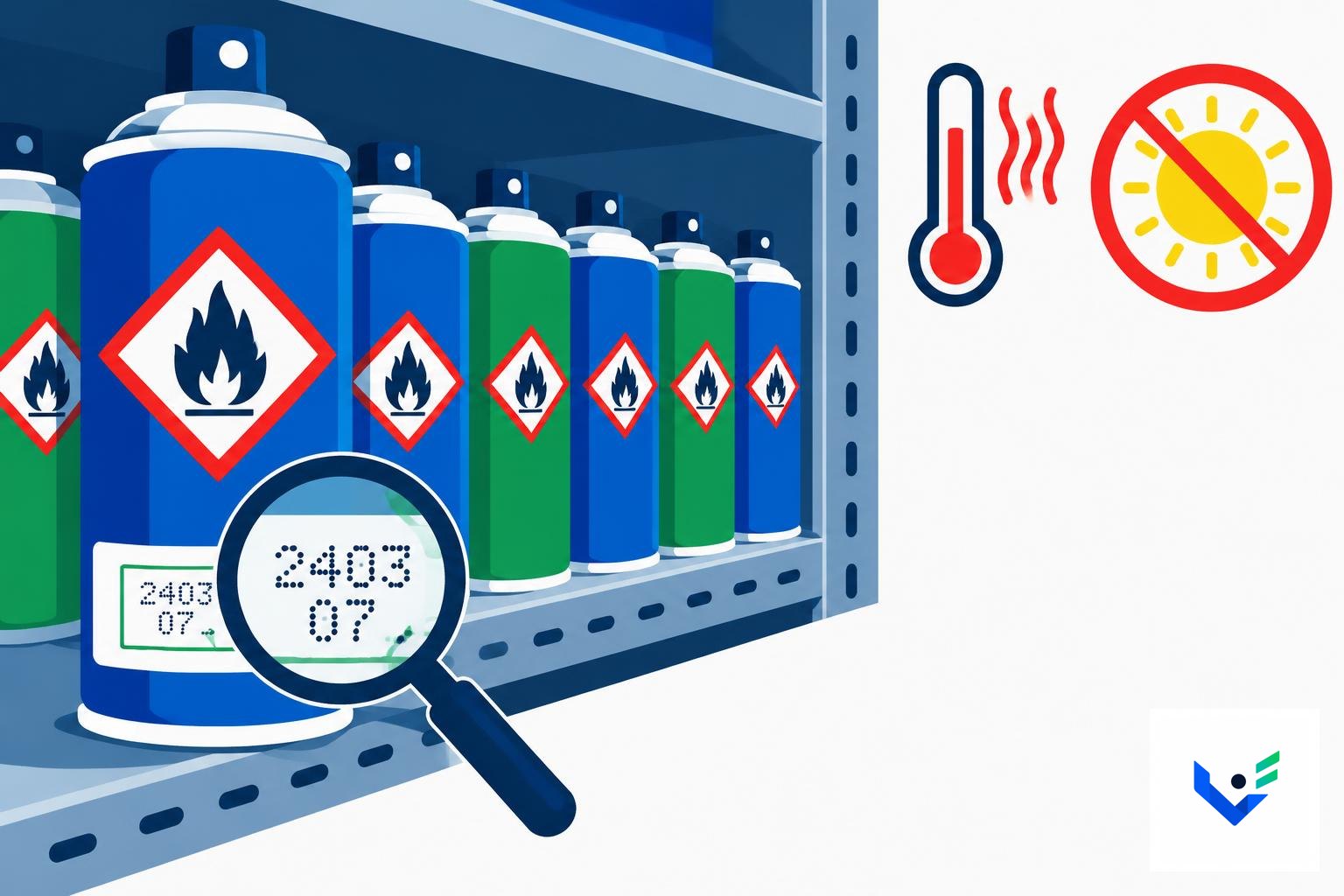
Shelf of aerosol cans with flame pictograms, a magnifier over a batch code and heat and sunlight warning icons — VIMS EHS illustration
Illustrative image: batch code, pictogram and temperature warning are checked when aerosols are received.

4. How to store aerosols and pressurised containers

Short answer: below 50°C, away from heat, ignition sources and direct sun, ventilated and in limited quantities. Flammable aerosols are CLP categories 1 or 2 (H222/H223 plus H229); category 3 carries H229 only. Follow SDS section 7, the risk assessment and fire rules; separate aerosols from oxidisers and rotate stock first-in, first-out.

5. Common labelling findings in inspections

Unlabelled spray bottles, illegible or faded labels, products without a current SDS in the local language, forgotten expired stock and no link between label, SDS and risk assessment. The full 16-section SDS structure is covered in our SDS guide.

6. Chemical register, labels and shelf life in VIMS

Short answer: the chemical register and SDS module holds CLP classification, pictograms, the current SDS, locations of use and, where provided, batch shelf life, with reminders. A QR code on a cabinet or secondary container opens a short workstation sheet. Try VIMS through our contact page.

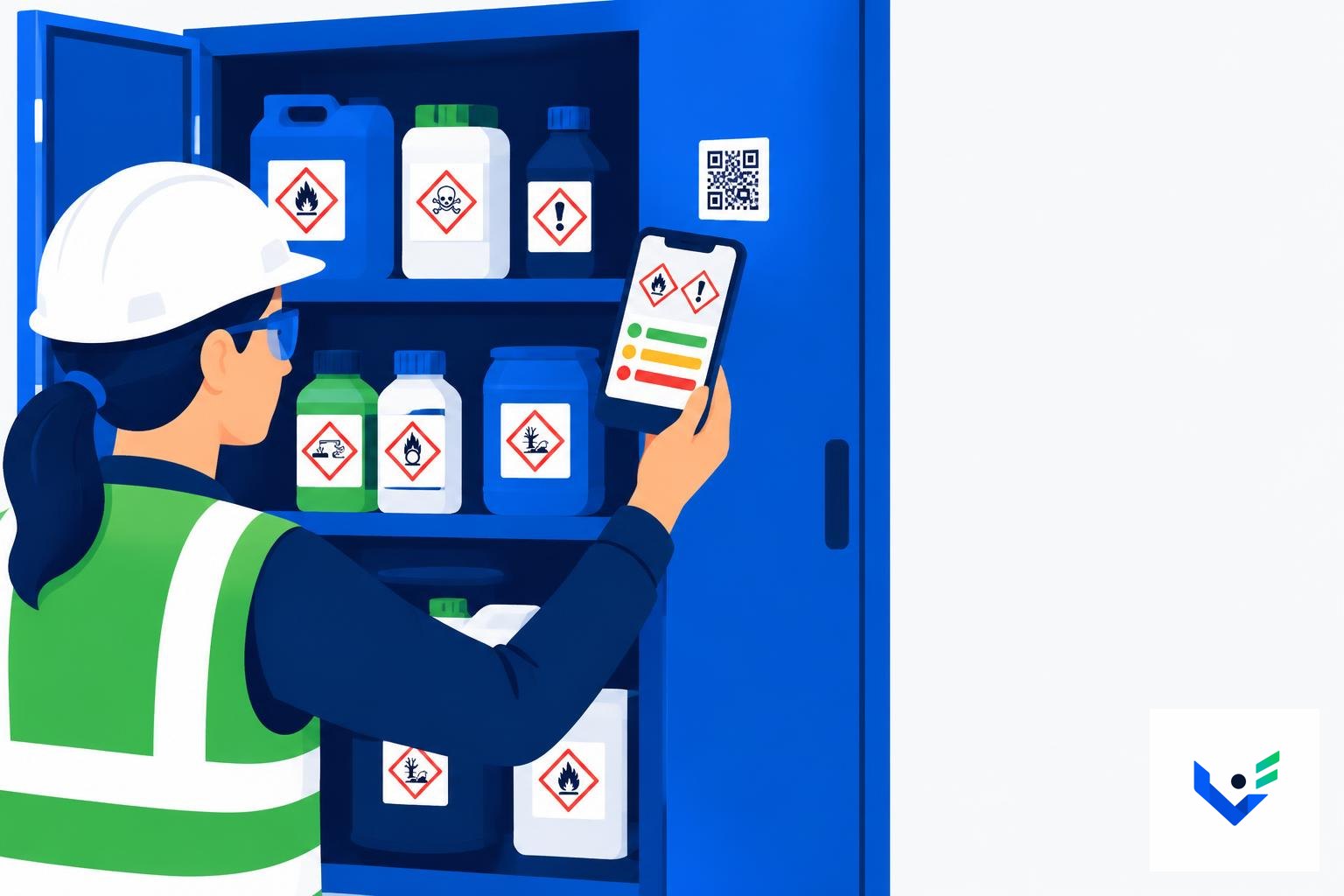
Safety specialist scanning a QR code on a chemical cabinet with CLP-labelled containers; the phone shows pictograms and statuses — VIMS EHS illustration
Illustrative image: a QR code on the cabinet opens the product card. Not an app screenshot.

Who labels what — supplier or employer?

Duties overview. Details depend on classification, the SDS and the risk assessment.

PackagingWho labelsBasisWhat to check
Original supplier packSupplierCLP Art. 17 and 31Language, legibility, SDS match, UFI
Secondary containerEmployerDirective 92/58/EEC Annex IIIName, pictograms, signal word, key H/P
Pipes and tanksEmployerDirective 92/58/EEC Annex IIIDurable marking at valves and joints
AerosolsSupplierDirective 75/324/EEC, CLP“3” mark, batch, 50°C warning, shelf life

Chemical labelling checklist

  • Every original pack has a legible CLP label in the local language.
  • Every product has a current SDS matching the label.
  • Secondary containers show name, pictograms, signal word and key H/P statements.
  • Chemicals never go into food or drink containers.
  • Aerosols are stored below 50°C away from heat and sun.
  • Batch shelf life is tracked and expired stock disposed of as waste.

Frequently asked questions about chemical labelling and aerosols

What must a CLP label include?

Supplier details, product identifier, pictograms, signal word, H and P statements, supplementary information where needed and nominal quantity for consumer packs — Article 17 CLP.

Does a decanted bottle need a label?

Yes. Containers used at work for hazardous substances must carry pictograms or warning signs under Annex III of Directive 92/58/EEC.

Do aerosol cans have an expiry date?

Not by law on every can. The manufacturer states shelf life; the can must carry a batch identification.

At what temperature should aerosols be stored?

Below 50°C, away from heat, ignition sources and direct sunlight.

What does the inverted epsilon on an aerosol mean?

The “3” mark shows the aerosol dispenser meets Directive 75/324/EEC.

Labels, SDSs and shelf life in one register

See how VIMS links CLP classification, safety data sheets, QR codes on containers and shelf-life reminders.